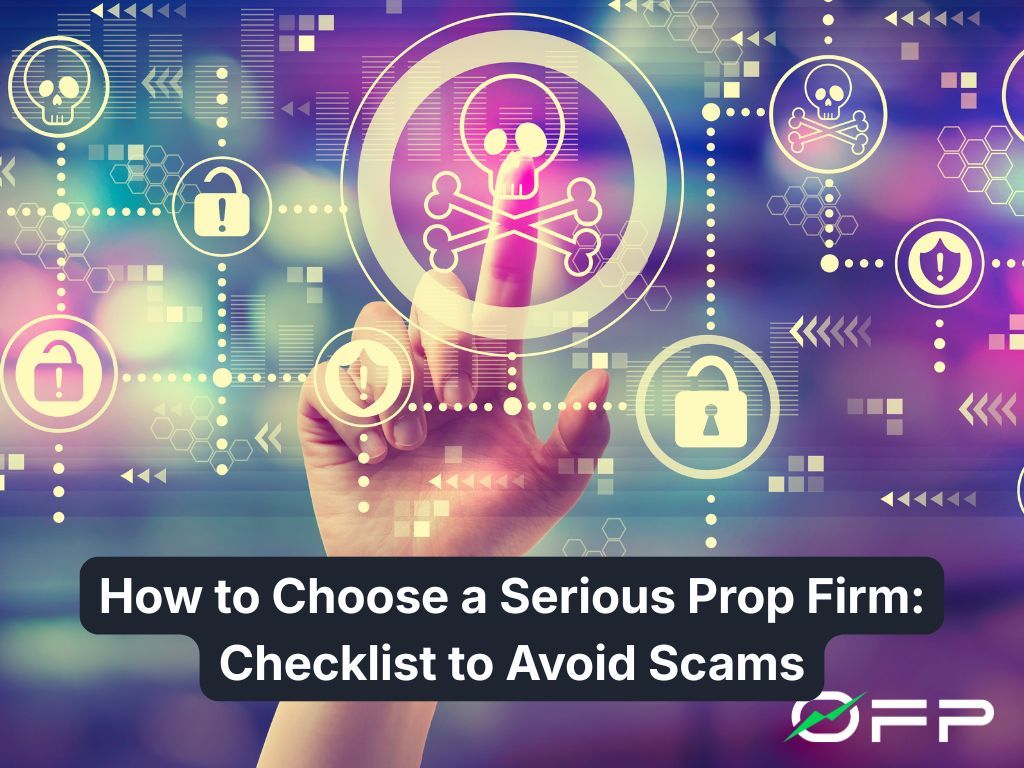
The prop firm industry has opened up incredible opportunities for talented traders to access significant capital. However, with rapid growth comes a darker side: a rise in questionable firms that promise the world but fail to deliver. Navigating this landscape can be daunting, but with the right knowledge, you can distinguish a legitimate partner from a potential scam.
This guide provides an objective checklist to help you evaluate proprietary trading firms. We’ll cut through the marketing hype and give you the tools to make a rational, informed decision. The goal is to find a transparent firm that aligns with your trading goals, not one that sets you up for failure.
The Ultimate Checklist for Vetting a Prop Firm
Choosing a prop firm is a major step in your trading career. Don’t rush it. Use this checklist to systematically vet any firm you’re considering.
1. Transparent and Realistic Trading Rules
A serious prop firm wants you to succeed. Their rules should be designed to manage risk, not to trip you up with hidden clauses or impossible targets.
What to look for:
- Clear Profit Targets: Are the profit targets for evaluation phases achievable without encouraging reckless trading? An 8-10% target is standard; anything significantly higher might be a red flag.
- Logical Drawdown Limits: Firms need to protect their capital. A daily and maximum drawdown limit is normal. However, these limits should be reasonable. Be wary of trailing drawdowns that are difficult to track or overly restrictive.
- Straightforward Payout Conditions: The criteria for receiving a payout should be crystal clear. Are there minimum trading days? Is there a consistency rule? A transparent firm defines these terms explicitly.
Red Flags:
- Vague or overly complex rules that seem designed to confuse.
- No-trading rules around news events that are overly broad.
- Hidden fees or commissions that aren’t disclosed upfront.
A trustworthy firm, such as OFP Funding, prioritizes transparency by offering straightforward rules, including no time limits or arbitrary profit targets on instant funding accounts. This approach empowers traders to focus on their strategy, not on navigating a maze of restrictions. For more on what defines a modern prop firm, explore our guide on prop firms explained and why they matter.
2. Fair and Attainable Evaluation Process
Many prop firms use an evaluation or challenge model. While this is a standard industry practice, the structure of the evaluation says a lot about the firm’s intentions.
What to look for:
- Reasonable Timeframes: If there’s a time limit, is it sufficient to achieve the profit target without forcing high-risk trades? Some of the best firms are now offering no time limits.
- Fair Pricing: The fee for an evaluation should be a reasonable reflection of the account size you’re aiming for. Outrageously high fees can be a sign the firm’s business model relies on challenge fees, not successful traders.
- Instant Funding Options: A growing number of legitimate firms offer instant funding models. This shows confidence in their risk management and their ability to attract skilled traders without a lengthy evaluation process.
Red Flags:
- Multi-phase challenges with progressively harder targets and tighter rules.
- Exorbitant fees that are disproportionate to the account size.
- A business model that seems to profit more from failed challenges than from profit splits.
3. A Verifiable Track Record of Payouts
This is non-negotiable. A prop firm’s entire promise rests on its ability and willingness to pay out profits. If a firm can’t prove it pays its traders, stay away.
What to look for:
- Public Payout Proof: Look for payout certificates, screenshots, or video testimonials on their website and social media channels. While these can be faked, a consistent stream of recent, verifiable proof is a good sign.
- Community Feedback: Check independent review sites like Trustpilot, forums, and Discord communities. What are other traders saying? Are there widespread complaints about delayed or denied payouts?
- Fast Payout Processing: Serious firms pride themselves on quick payout processing, often within 24-48 hours. Delays and excuses are a major warning sign.
Red Flags:
- No evidence of payouts anywhere.
- A flood of negative reviews mentioning payment issues.
- Vague excuses or overly bureaucratic processes for withdrawals.
4. Quality of Broker and Trading Platforms
The technology a prop firm uses is critical to your success. Poor execution, high spreads, or unstable platforms can sabotage even the best trading strategy.
What to look for:
- Reputable Brokerage: Does the firm disclose who their liquidity provider or broker is? A partnership with a regulated, well-known broker is a sign of legitimacy.
- Low Spreads and Commissions: Test their demo or free trial accounts to check the trading conditions. Are the spreads competitive, or will they eat into your profits?
- Stable and Fast Platforms: The firm should offer industry-standard platforms like MetaTrader 5 (MT5) or cTrader. The platform should be reliable, with fast execution speeds.
Red Flags:
- Refusal to disclose their broker or liquidity provider.
- Unusually high spreads or commissions compared to industry standards.
- Frequent platform crashes, freezes, or requotes.
Understanding market dynamics is crucial. A good firm provides the tools to help you succeed, but you also need to do your part. Sharpen your skills with our smart beginner’s guide to reading the markets.
5. Responsive and Knowledgeable Customer Support
When you have an issue with your account or a question about a rule, you need fast and competent support. Test a firm’s support team before you sign up.
What to look for:
- Multiple Contact Channels: Do they offer live chat, email, and a Discord server?
- Fast Response Times: Send them a few questions. How long does it take to get a clear, helpful response?
- Trader-Centric Support: The best firms employ support staff who understand trading. They can provide specific answers, not just generic, scripted replies.
Red Flags:
- Support is only available via a slow ticketing system.
- Responses are slow, vague, or unhelpful.
- The support team seems unaware of their own trading rules.
6. Realistic Profit Splits
A 100% profit split sounds amazing, but is it sustainable? It can be, but you need to understand the model. Firms offering high splits often have other levers, like the initial fee or specific trading parameters.
What to look for:
- Clear Split Structure: Is the profit split clearly stated? Does it increase as you scale your account?
- Sustainable Model: A standard split is around 80/20. Firms offering up to 90% or even 100% can be legitimate, but they often have stricter rules or different fee structures to compensate. OFP Funding, for example, offers 100% profit retention as part of its transparent model, balancing it with a clear, one-time fee structure.
Red Flags:
- Promises of impossibly high profit splits with no clear business model to support them.
- Profit split terms that change without notice.
True success in trading isn’t about finding a shortcut; it’s about building the right mindset for real results. A good prop firm supports this long-term vision.
Conclusion: Choose a Partner, Not Just a Provider
Choosing a prop firm is like choosing a business partner. You need a firm that is transparent, reliable, and invested in your success. OFP Funding was built on these principles, offering instant funding and clear, trader-centric rules to remove the barriers between you and the capital you deserve.By using this checklist, you can objectively assess any prop firm and confidently choose a partner that will help you grow. Don’t be swayed by flashy marketing or unrealistic promises. Do your due diligence, focus on transparency, and select a firm that provides a clear and fair path to consistent profitability. Building the right daily habits is half the battle; the other half is having a reliable partner by your side. Dig deeper into what defines a modern Forex trader and the surprising truths about them to ensure your goals align with reality.
'%3e%3cellipse%20cx='694.451'%20cy='616.029'%20rx='390.451'%20ry='312.029'%20fill='var(--fill-0,%20%235473FF)'%20fill-opacity='0.49'/%3e%3c/g%3e%3cdefs%3e%3cfilter%20id='filter0_f_0_375'%20x='0'%20y='0'%20width='1388.9'%20height='1232.06'%20filterUnits='userSpaceOnUse'%20color-interpolation-filters='sRGB'%3e%3cfeFlood%20flood-opacity='0'%20result='BackgroundImageFix'/%3e%3cfeBlend%20mode='normal'%20in='SourceGraphic'%20in2='BackgroundImageFix'%20result='shape'/%3e%3cfeGaussianBlur%20stdDeviation='152'%20result='effect1_foregroundBlur_0_375'/%3e%3c/filter%3e%3c/defs%3e%3c/svg%3e)
'%3e%3cellipse%20cx='547.5'%20cy='498.5'%20rx='243.5'%20ry='194.5'%20fill='var(--fill-0,%20%235473FF)'%20fill-opacity='0.49'/%3e%3c/g%3e%3cdefs%3e%3cfilter%20id='filter0_f_0_102'%20x='0'%20y='0'%20width='1095'%20height='997'%20filterUnits='userSpaceOnUse'%20color-interpolation-filters='sRGB'%3e%3cfeFlood%20flood-opacity='0'%20result='BackgroundImageFix'/%3e%3cfeBlend%20mode='normal'%20in='SourceGraphic'%20in2='BackgroundImageFix'%20result='shape'/%3e%3cfeGaussianBlur%20stdDeviation='152'%20result='effect1_foregroundBlur_0_102'/%3e%3c/filter%3e%3c/defs%3e%3c/svg%3e)