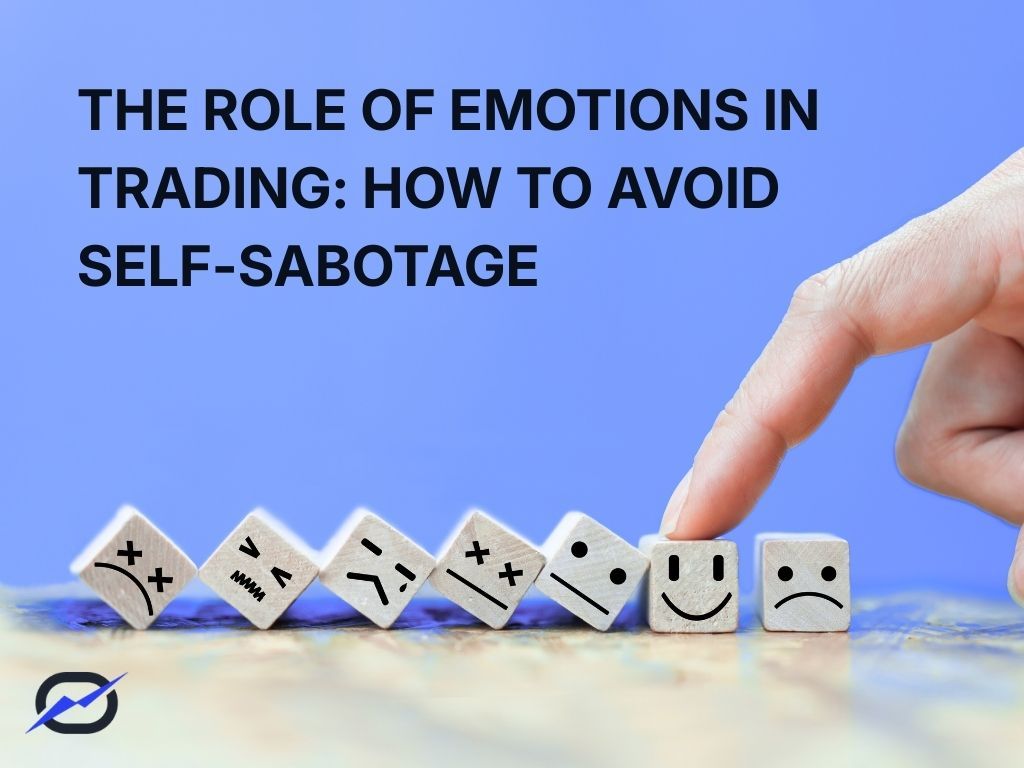
In the world of trading, we often focus on charts, indicators, and market analysis. We build strategies, study patterns, and track economic news with precision. Yet, one of the most powerful forces influencing your success isn’t found on any screen—it’s within you. Emotions like fear, greed, hope, and regret can silently steer your decisions, often leading to self-sabotage and derailing even the most well-crafted trading plans.
Understanding and managing your emotional responses is not just a soft skill; it’s a critical component of a sustainable trading career. This article will explore the key emotions that impact traders, how they lead to self-sabotage, and practical strategies to keep them in check. By mastering your inner game, you can trade with greater clarity, discipline, and confidence.
The Four Horsemen of Trading Sabotage
Every trader, from novice to veteran, grapples with emotions. The market is an inherently emotional environment, designed to test your resolve. Recognizing the primary emotional culprits is the first step toward neutralizing their impact.
1. Fear: The Paralyzer
Fear is perhaps the most primal and powerful emotion in trading. It can manifest in several ways:
- Fear of Missing Out (FOMO): You see an asset rocketing upward and jump in without proper analysis, afraid you’ll miss the profits. This often leads to buying at the peak, just before a correction.
- Fear of Loss: This can cause you to exit a winning trade too early, cutting your profits short. It can also make you hesitate to enter a valid trade setup, leading to missed opportunities.
- Fear of Being Wrong: After a losing streak, you might become so afraid of another loss that you avoid trading altogether, a condition known as “analysis paralysis.”
Fear triggers our fight-or-flight response, flooding our system with adrenaline and cortisol. These chemicals are great for escaping a predator but terrible for making rational financial decisions. They narrow your focus and push you toward impulsive, short-sighted actions.
2. Greed: The Siren’s Call
Greed is the flip side of fear. It’s the intoxicating desire for more—more profits, bigger wins, and faster gains. Greed convinces you to bend your rules “just this once.” It might tempt you to:
- Over-leverage: Risking too much capital on a single trade, hoping for a massive payout.
- Hold a winner too long: Ignoring exit signals in the hope that a profitable trade will turn into a life-changing one, only to watch profits evaporate.
- Revenge trade: After a loss, you might jump back into the market with a larger position to “win back” what you lost, abandoning your strategy entirely.
Greed is a dangerous emotion because it feels good. It’s fueled by dopamine and creates a sense of euphoria. However, trades based on greed are rarely based on logic, making them a fast track to blowing your account.
3. Hope: The False Friend
In life, hope is a virtue. In trading, it can be a liability. Hope becomes dangerous when it replaces analysis. It’s the feeling that a losing trade will “turn around” if you just give it a little more time, even when all technical indicators point to further decline.
Hope makes traders hold onto losing positions far beyond their predetermined stop-loss. Instead of cutting a small, manageable loss, they allow it to grow into a significant drawdown. A clear and disciplined strategy relies on rules, not wishful thinking. Sticking to your plan, especially when it’s tough, is crucial. That’s why having firm trading rules and adhering to them without exception is non-negotiable for long-term success.
4. Regret: The Heavy Anchor
Regret is the emotion that lingers. You might regret a loss, a missed opportunity, or a mistake you made. This feeling can cloud your judgment on future trades. If you regret missing a big move, you might be more susceptible to FOMO on the next one. If you regret a loss, you may become overly cautious and hesitant.
Dwelling on past mistakes keeps you from focusing on the present opportunity. The market doesn’t care about your last trade, and neither should you. Every new trade is a fresh start, with its own unique set of probabilities.
Practical Strategies for Emotional Mastery
Recognizing these emotions is only half the battle. The real work lies in developing systems to manage them. Professional traders don’t eliminate emotions; they learn to control their reactions to them.
Create a Rock-Solid Trading Plan
A trading plan is your constitution. It is a written document that outlines your strategy, risk management rules, and criteria for entering and exiting trades. It should be so clear that there is no room for emotional interpretation. Before you enter any trade, you should know:
- Your entry point.
- Your profit target.
- Your stop-loss.
- The amount of capital you are willing to risk.
When emotions flare up, your trading plan becomes your anchor. It reminds you of the logical decisions you made when you were calm and objective.
Practice Discipline Through Daily Habits
Emotional resilience is built over time, not overnight. It requires consistent practice and the development of strong routines. Some of the most successful traders integrate specific rituals into their day to stay grounded. As explored in 5 daily habits that separate a mediocre trader from a consistent one, things like journaling, pre-market preparation, and post-market reviews are essential.
A trading journal, in particular, is a powerful tool for emotional management. Log not only your trades but also your feelings. Were you anxious when you entered? Greedy when you held? By tracking your emotional patterns, you can identify your personal triggers and develop strategies to counteract them.
Leverage the Structure of Prop Firms
For many traders, managing risk and psychology is easier within a structured environment. This is where proprietary trading firms come in. Prop firms provide capital to traders, allowing them to trade larger accounts without risking their own money.
More importantly, firms like OFP operate with clear rules around maximum drawdown and daily loss limits. These rules act as a psychological safety net. They force you to manage risk and prevent a single bad day driven by emotion from wiping out your account. Trading with a prop firm instills discipline because you are accountable to a set of external rules, which helps reinforce your own internal discipline.
Embrace Mindfulness and Take Breaks
When you feel overwhelmed, step away from the screen. Go for a walk, practice deep breathing, or do something completely unrelated to trading. Mindfulness practices can help you create a space between an emotional impulse and your reaction. This pause allows your rational mind to step back in and make a calculated decision.
Recognize that you are not a machine. You will have good days and bad days. The goal is not to be perfect but to be consistently disciplined.
Your Journey, Your Story
Every trader’s journey with emotions is unique. The key is to shift from being a victim of your emotions to an observer of them. By implementing a solid plan, building disciplined habits, and understanding your psychological triggers, you can prevent self-sabotage and unlock your true potential.
What are your experiences with emotions in trading? Have you ever battled FOMO or revenge trading? Share your story in the comments below. Your insights could help another trader navigate their own journey.
'%3e%3cellipse%20cx='694.451'%20cy='616.029'%20rx='390.451'%20ry='312.029'%20fill='var(--fill-0,%20%235473FF)'%20fill-opacity='0.49'/%3e%3c/g%3e%3cdefs%3e%3cfilter%20id='filter0_f_0_375'%20x='0'%20y='0'%20width='1388.9'%20height='1232.06'%20filterUnits='userSpaceOnUse'%20color-interpolation-filters='sRGB'%3e%3cfeFlood%20flood-opacity='0'%20result='BackgroundImageFix'/%3e%3cfeBlend%20mode='normal'%20in='SourceGraphic'%20in2='BackgroundImageFix'%20result='shape'/%3e%3cfeGaussianBlur%20stdDeviation='152'%20result='effect1_foregroundBlur_0_375'/%3e%3c/filter%3e%3c/defs%3e%3c/svg%3e)
'%3e%3cellipse%20cx='547.5'%20cy='498.5'%20rx='243.5'%20ry='194.5'%20fill='var(--fill-0,%20%235473FF)'%20fill-opacity='0.49'/%3e%3c/g%3e%3cdefs%3e%3cfilter%20id='filter0_f_0_102'%20x='0'%20y='0'%20width='1095'%20height='997'%20filterUnits='userSpaceOnUse'%20color-interpolation-filters='sRGB'%3e%3cfeFlood%20flood-opacity='0'%20result='BackgroundImageFix'/%3e%3cfeBlend%20mode='normal'%20in='SourceGraphic'%20in2='BackgroundImageFix'%20result='shape'/%3e%3cfeGaussianBlur%20stdDeviation='152'%20result='effect1_foregroundBlur_0_102'/%3e%3c/filter%3e%3c/defs%3e%3c/svg%3e)