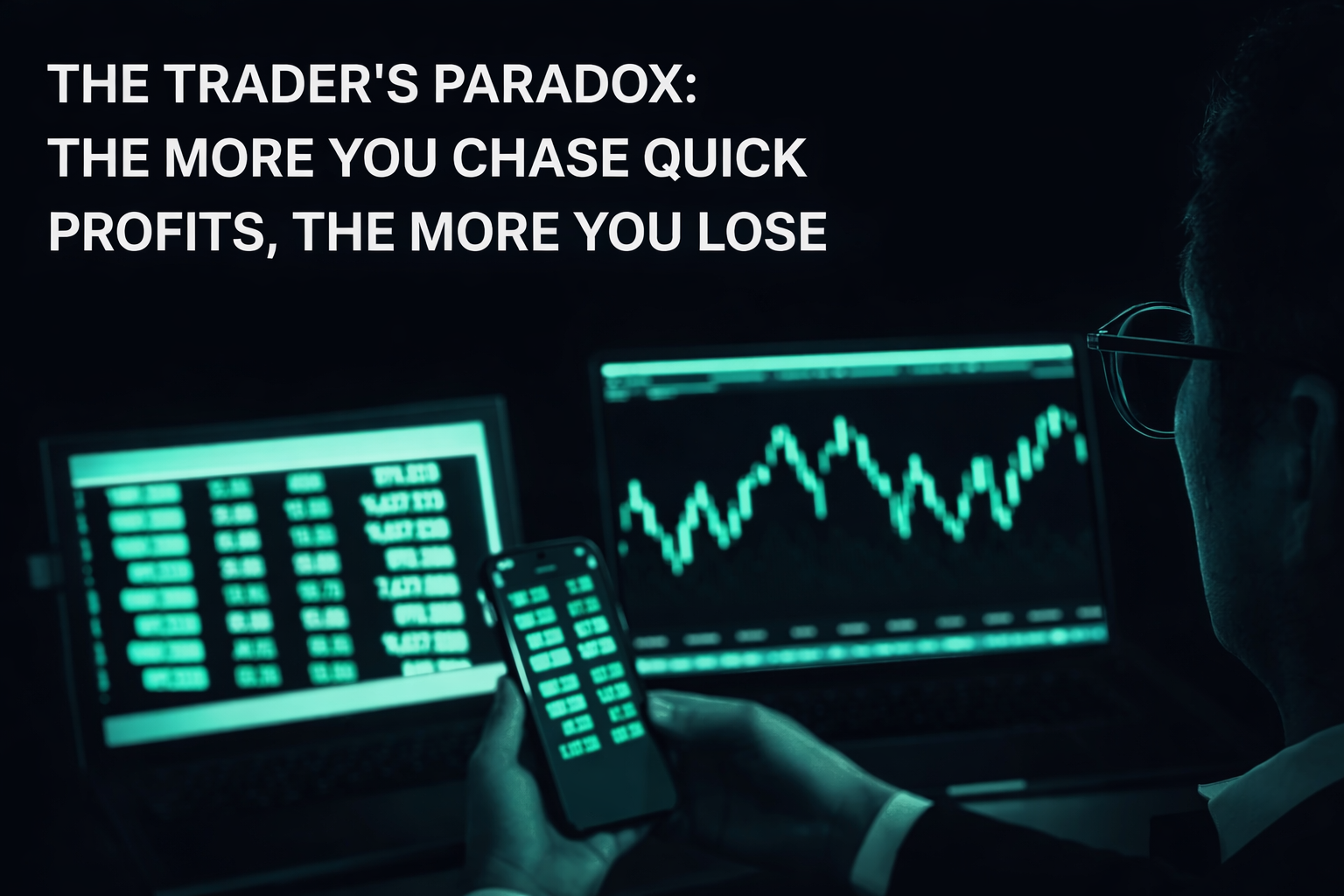
It was a Tuesday morning when Alex’s $50,000 funded account was glowing with a $2,500 profit. The setup on EUR/USD had been perfect—a clean break, a flawless retest, and a textbook entry. His strategy, honed over months of discipline, had delivered exactly as planned. The logical next step was clear: close the trade, secure the profit, and wait for the next high-probability setup.
But then a thought crept in, quiet at first, then louder. “What if it keeps running? Another 20 pips could mean an extra $1,000. It looks so strong.”
That thought was the beginning of the end. Alex held on. The market hesitated, then pulled back, erasing a third of his gains. Panic started to bubble. “It’s just a retracement,” he told himself, his knuckles white as he gripped the mouse. But it wasn’t. The market reversed, blowing past his entry point. He was now in the red. Instead of cutting the loss, he doubled down, convinced the original move would resume.
By lunchtime, his $2,500 profit had turned into a $3,000 loss, a devastating swing that violated his risk parameters and put his funded account in jeopardy. Alex stared at the screen, a cold mix of anger and shame washing over him. He hadn’t been beaten by the market; he had beaten himself.
This story isn’t unique. It’s the painful reality of the Trader’s Paradox: the desperate, urgent chase for quick profits is the very thing that guarantees you will lose them. It’s a cycle of self-sabotage driven by emotion, and breaking it is the single most important step toward consistent profitability.
The Psychology of Self-Sabotage
Why do intelligent, capable traders like Alex make such irrational decisions? The answer lies deep in our psychology. The promise of fast, easy money triggers a powerful dopamine response in our brains. It’s the same chemical reward system that governs addiction. When a trade goes our way, we get a rush, and we start craving more of it.
This craving is what fuels the chase. It overrides logic, discipline, and the trading plan you so carefully constructed when you were calm and objective.
Fear of Missing Out (FOMO)
FOMO is the trader’s nemesis. It’s that nagging feeling that if you don’t jump on a move right now, you’ll miss out on a life-changing profit. You see a chart rocketing upward and feel an almost physical pull to buy, even if it’s not part of your strategy. You abandon your plan and chase the price, often buying at the peak just before it reverses.
Revenge Trading
After taking a loss, it’s natural to feel frustrated. Revenge trading is the attempt to “win back” what the market “took” from you. You jump back into the market without a valid setup, increase your position size, and take on excessive risk. You’re no longer trading; you’re gambling against the market out of pure emotion. It rarely ends well.
Greed and the “One Big Win”
The dream of hitting one massive trade that solves all your financial problems is a dangerous fantasy. This mindset causes traders to hold onto winning trades for too long, watching them turn into losers, or to risk far too much on a single “can’t-miss” setup. Real, sustainable trading is not about home runs; it’s about consistently hitting singles and doubles. It’s about recognizing that trading is not a shortcut but a mindset that builds real results.
Breaking the Cycle: From Chaser to Professional
The difference between a struggling trader and a consistently profitable one isn’t a secret strategy. It’s the mastery of discipline and emotional control. It’s about building the right habits.
1. The Trading Plan is Non-Negotiable
Your trading plan is your constitution. It must be written down, and it must be followed without exception. It should define:
- Your Setups: What specific market conditions must be met before you enter a trade?
- Your Entry Criteria: Exactly where and how will you enter?
- Your Exit Criteria: Where is your stop-loss, and where will you take profit?
- Your Risk Management: How much will you risk per trade? (e.g., 1% of your account).
When you are tempted to chase a trade, open your plan. If the trade doesn’t meet every single one of your criteria, you don’t take it. Period. This isn’t just about rules; it’s about developing the 5 daily habits that separate a mediocre trader from a consistent one.
2. Focus on the Process, Not the Profits
This is a critical mental shift. Stop focusing on how much money you can make on a single trade. Instead, focus on executing your plan flawlessly. Did you follow your rules? Did you manage your risk correctly? Did you remain patient?
If you can answer “yes” to these questions, then the trade was a success, regardless of the outcome. Profits are the byproduct of a well-executed process. When you focus on the process, the profits will eventually follow. This professional approach is one of the 5 surprising truths about Forex traders who find long-term success.
3. Implement a “Cool-Down” Period
Emotions run high after a big win or a frustrating loss. This is when you are most vulnerable to self-sabotage. Institute a mandatory cool-down period. After closing a significant trade (win or lose), step away from your charts for at least 30 minutes. Go for a walk, listen to music, or do something completely unrelated to trading. This allows the emotional fog to clear, so your next decision is based on logic, not impulse.
4. Redefine Your Idea of Success
The flashy Instagram posts of Lamborghinis and stacks of cash have poisoned the perception of trading. That isn’t success; it’s marketing. Real success is surviving your first year. It’s ending the week with a small, consistent gain. It’s following your plan for 20 trades in a row without a single emotional error.
Celebrate these small, process-oriented wins. They are the foundation of a long and profitable trading career. Understanding what it truly means to be a trader in today’s world requires peeling back the layers of hype. We delve into this in our article on unveiling the modern Forex trader.
At OFP Funding, we understand the challenges traders face in navigating the complexities of the market. That’s why we’ve built a platform that prioritizes transparency, discipline, and support. With our instant funding model, traders can focus on perfecting their strategies without the distractions of challenges or hidden terms. Our commitment to empowering traders with substantial capital, clear rules, and a community-driven approach sets us apart in the industry. At OFP, we believe in thinking big and providing the tools you need to achieve sustainable success. Learn more about how we’re redefining the prop firm experience at OFP Funding.
Your Path Forward
Alex’s story is a cautionary tale, but it doesn’t have to be yours. Every trader has faced this paradox. The ones who succeed are those who recognize the enemy within and take deliberate steps to conquer it. They understand that the market is a complex environment, and learning to read the markets with a smart beginner’s guide is as important as managing your own emotions.
Stop chasing. Start executing. Focus on discipline, embrace the process, and let go of the desperate need for quick profits. A prop firm provides the capital, but you must provide the professionalism. We’ve explained prop firms and why they matter as a tool for disciplined traders, not a lottery ticket for gamblers.
The moment you stop chasing money is the moment you open the door for it to come to you.
'%3e%3cellipse%20cx='694.451'%20cy='616.029'%20rx='390.451'%20ry='312.029'%20fill='var(--fill-0,%20%235473FF)'%20fill-opacity='0.49'/%3e%3c/g%3e%3cdefs%3e%3cfilter%20id='filter0_f_0_375'%20x='0'%20y='0'%20width='1388.9'%20height='1232.06'%20filterUnits='userSpaceOnUse'%20color-interpolation-filters='sRGB'%3e%3cfeFlood%20flood-opacity='0'%20result='BackgroundImageFix'/%3e%3cfeBlend%20mode='normal'%20in='SourceGraphic'%20in2='BackgroundImageFix'%20result='shape'/%3e%3cfeGaussianBlur%20stdDeviation='152'%20result='effect1_foregroundBlur_0_375'/%3e%3c/filter%3e%3c/defs%3e%3c/svg%3e)
'%3e%3cellipse%20cx='547.5'%20cy='498.5'%20rx='243.5'%20ry='194.5'%20fill='var(--fill-0,%20%235473FF)'%20fill-opacity='0.49'/%3e%3c/g%3e%3cdefs%3e%3cfilter%20id='filter0_f_0_102'%20x='0'%20y='0'%20width='1095'%20height='997'%20filterUnits='userSpaceOnUse'%20color-interpolation-filters='sRGB'%3e%3cfeFlood%20flood-opacity='0'%20result='BackgroundImageFix'/%3e%3cfeBlend%20mode='normal'%20in='SourceGraphic'%20in2='BackgroundImageFix'%20result='shape'/%3e%3cfeGaussianBlur%20stdDeviation='152'%20result='effect1_foregroundBlur_0_102'/%3e%3c/filter%3e%3c/defs%3e%3c/svg%3e)